The 5-Minute Arm Workout to Help You Move Better on the Trails
 Wild & Well Editors
Aug 17, 2026
4 min read
Adding strength work to an already active lifestyle involving climbing, hiking, and running probably seems daunting. But strength training can build stability, help prevent injury, and keep you moving for as long as possible.
Many of us will prioritize the lower body with what time we do have. And just as many will neglect the arms. I get it—legs provide thepropulsionyou need to run and hike.
But that’s not to say that the arms aren’t important. As a physical therapist, I am a huge advocate for whole-body strength for athletes. And I promise, it doesn’t have to take hours in the gym.
Why Arm Strength Is Essential for Better Performance
When you run or hike, your arm swing acts to counterbalance the movements and forces in the lower body, improvingrotational stabilitythroughout the trunk and spine,lateral balance, andstride length. Restricting arm movement can change theforces and joint anglesassociated with running and increase torso rotation, potentially placing more stress on areas that can’t handle it. Overall, proper arm use contributes to a more metabolically efficient gait.
Additionally,upper body strengthand endurance, particularly in the scapular and thoracic muscles, play a key role in maintaining properposturewhile running. A forward-slumped upper back and head can decrease efficiency and affectrespiratory function, while a more upright position creates a stable base and promotes better force transfer.
Which Arm Muscles Can Benefit From a Strength Boost?
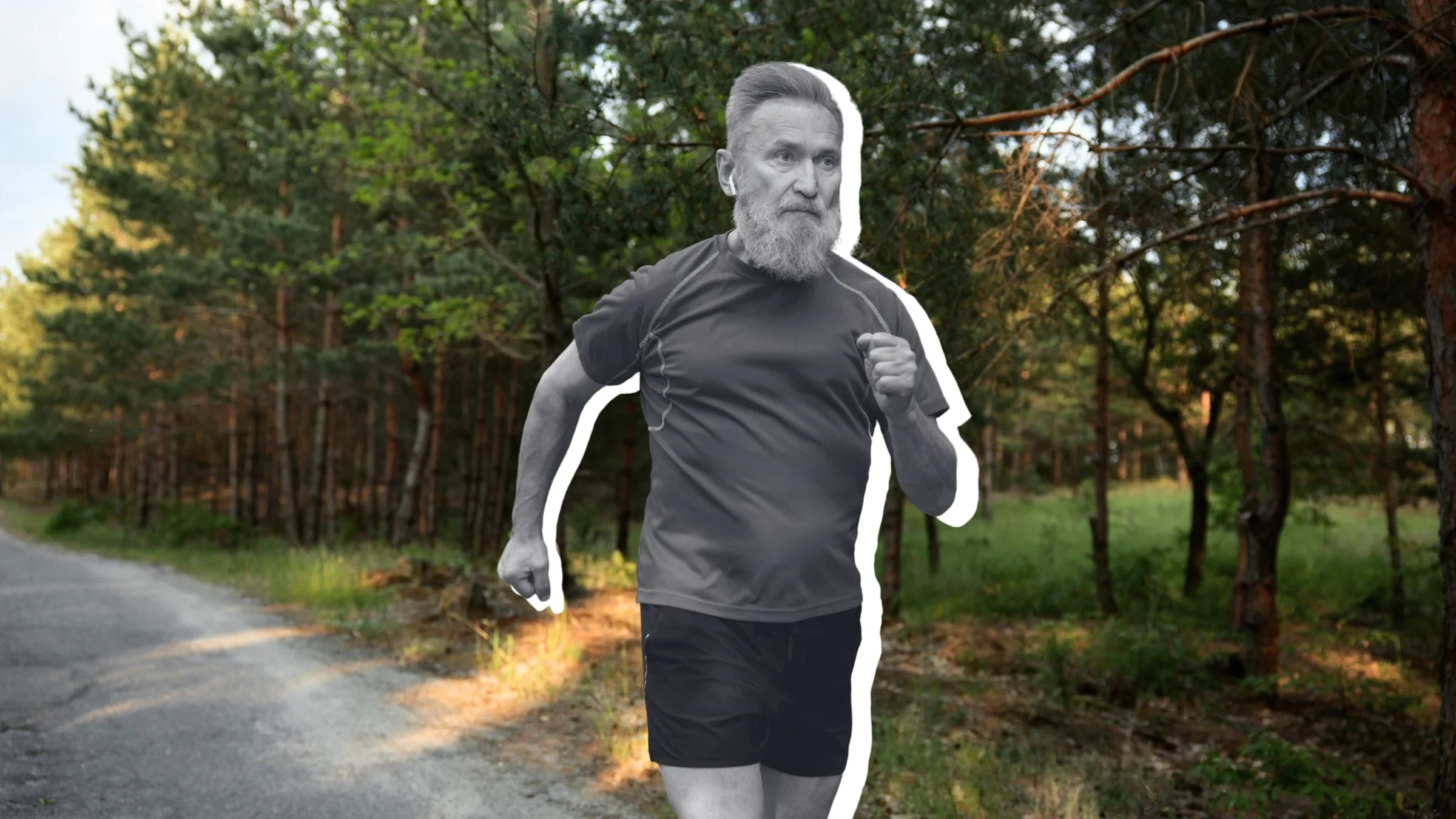
For runners, your arm swing should look relaxed, with the shoulder blades back (but not unnaturally so), elbows bent to about 90 degrees and tucked in relatively close to the body, and arms moving relatively straight forward and back, avoiding excessive twisting or crossing over midline (which can throw off the trunk). So, an upper-body routine for runners should ideally work the shoulder muscles that move the arms, engage the postural muscles, respect the link between the upper and lower body across the trunk, and promote proper motor patterns.
For hikers, a strong upper body can support posture and lessen the chance of shoulder pain and tension headacheswhen carrying a heavy packfor long distances.
What does that mean for a good arm workout? Simple “pull” exercises that work the scapular and upper back muscles,biceps, and posterior deltoid, and a “push” exercise that works the chest muscles,triceps, and anterior deltoid, performed in functional positions, cover the bases nicely.
A 5-Minute Workout for Strong, Trail-Ready Arms
This quick routine, with just a couple of exercises, can be done anytime to build upper-body strength and improve stability, posture, and efficiency. You can also alternate these two exercises as a superset to save time.
Single-Arm Row in Split Squat
The row is a common, simple “pull” exercise, and performing it in a split squat position engages the lower body and trunk.
How to Do It:
• Lower into a split squat, with one leg forward and the knee bent to about 90 degrees and the other leg back (knee hovering above the ground), facing a securely anchored exercise band or cable column. • Keep the trunk and head upright, shoulders back. • Grab the end of the band with the hand on the same side as the back leg and pull straight back with a rowing motion. • Perform 8-12 reps, then switch leg position and perform with the opposite arm. • Repeat for 3 sets total.
Push-up Plus (PUP)
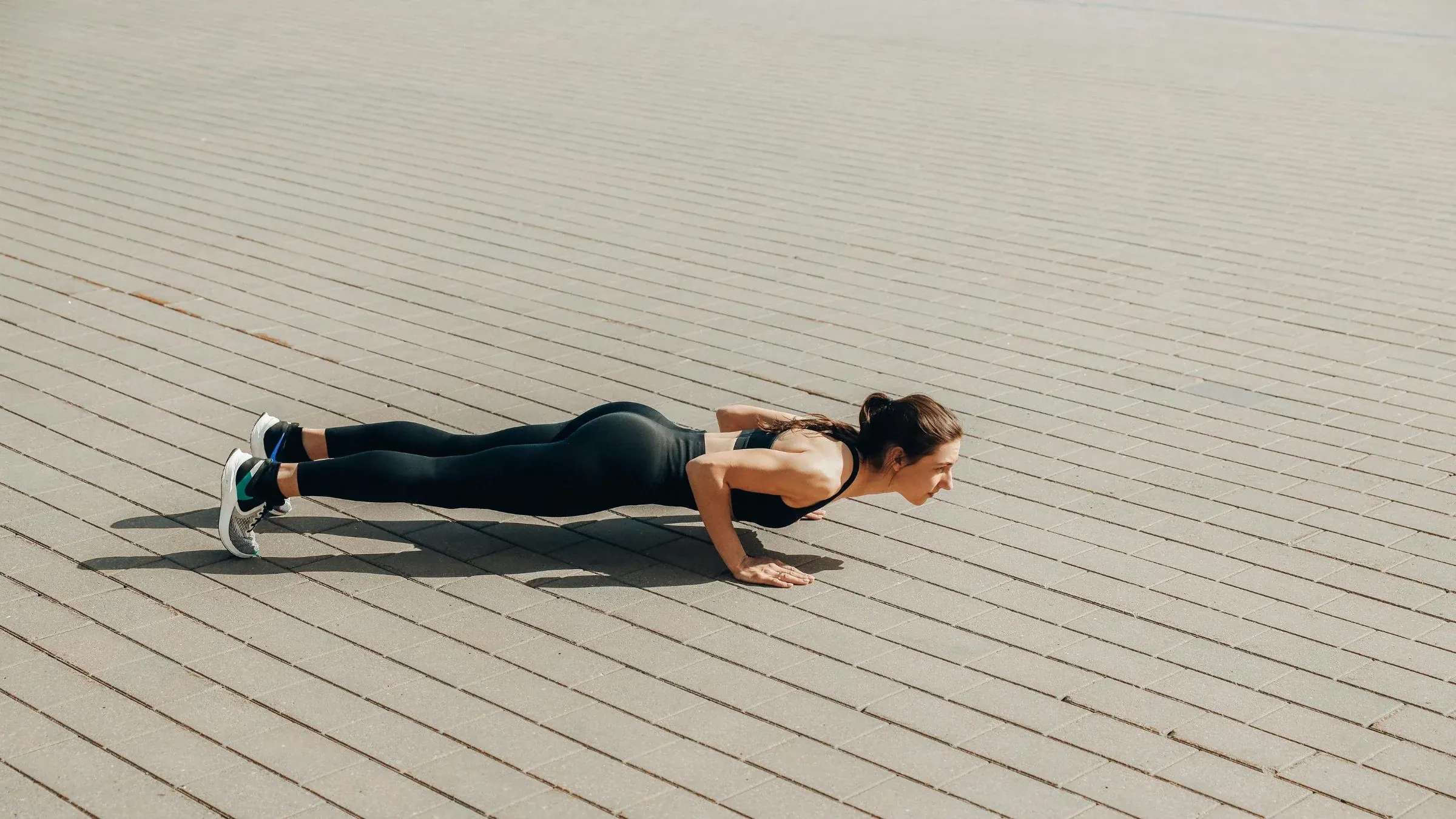
Thepush-upis again a simple, classic, practical “push” exercise that also incorporates trunk strength and stability. Adding in the “plus” (PUP) component—scapular protraction—activates theserratus anteriorwith relativelylow upper trapeziusactivation.
This matters because the serratus anterior plays an important role inmaintaining scapular positioningand proper posture, while excess upper trapezius activation hikes the shoulders up toward the ears, leading to tenser arm movements (and potentially compromised respiration).
• Start in a push-up position and do a standard push-up. • At the top of the motion, perform the “plus”—with the elbows straight, push the chest and upper back further up by separating your shoulder blades while keeping the trunk and pelvis stable. • Bring the shoulder blades back to the starting position and repeat. • Aim for 3 sets of 8 to 15 reps.
Pro tip: If a full push-up is too difficult, do it from your knees. If you want a greater challenge, place your feet on an unstable surface (stability ball, suspension trainer) to increase the difficulty.
Want moreOutsidehealth stories?Sign up for the Bodywork newsletter. And for tips on how to train, fuel, and recover better,sign up for the Sweat Science 101 newsletter.